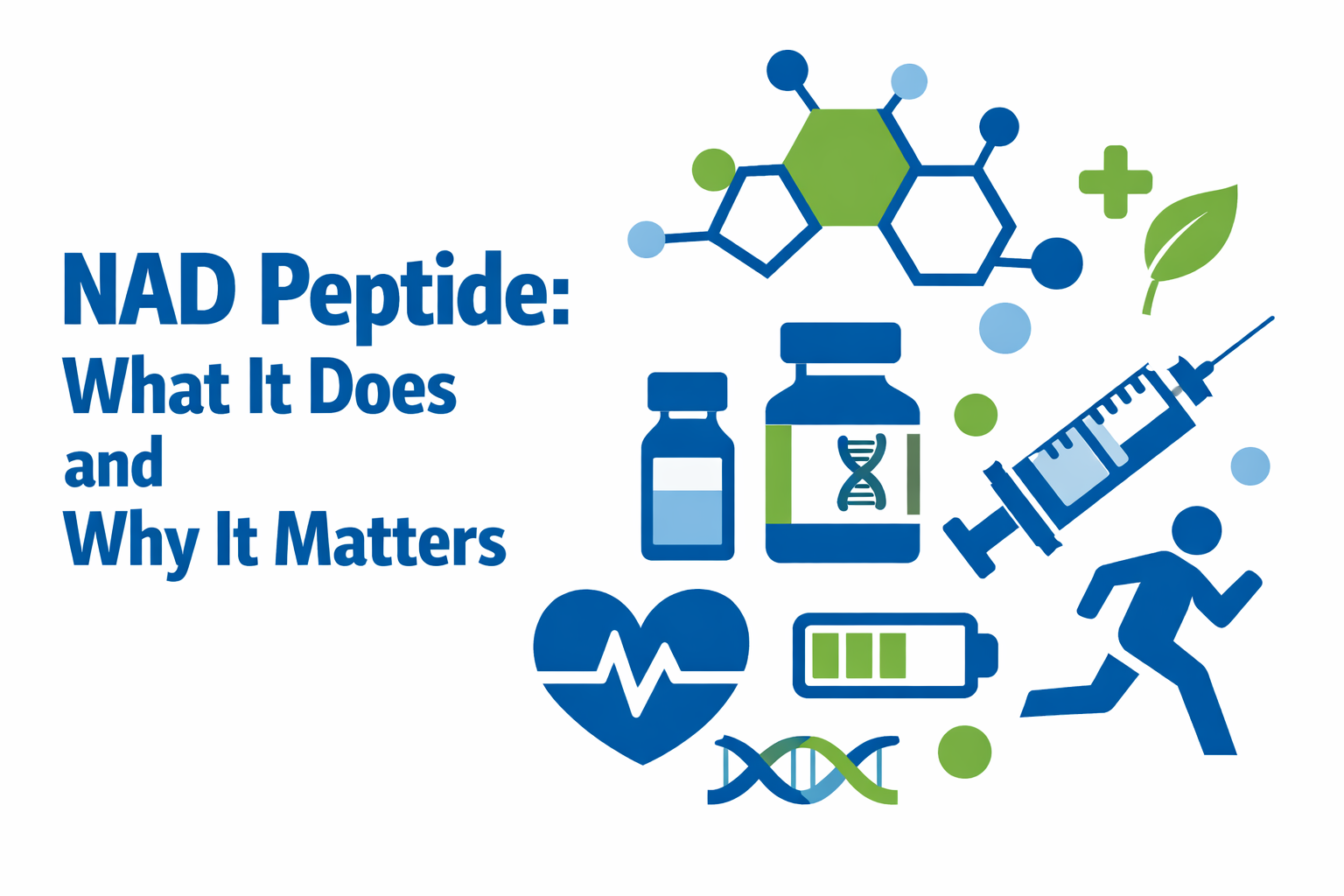
NAD Peptide: What It Does and Why It Matters
Few molecules in the human body carry as much weight as NAD+. It sits at the center of nearly every energy-producing reaction, helps repair damaged DNA, and keeps your cells running efficiently. Without enough of it, everything slows down.
The growing interest in NAD+ (nicotinamide adenine dinucleotide) as a therapeutic target has pushed it from obscure biochemistry into mainstream wellness conversations. Clinics now offer IV therapy, peptide injections, and oral supplementation protocols built around restoring NAD+ levels. The science behind it is compelling, even if some questions remain open.
This article breaks down what NAD peptide actually does, why your levels matter, and what the research says about using it to support energy, brain health, aging, and recovery.
What is NAD Peptide?
NAD+ is a coenzyme found in every living cell. It acts as a carrier molecule, shuttling electrons during metabolic reactions that convert food into usable energy. Without it, your mitochondria cannot function properly.
The term “NAD peptide” is sometimes used loosely in wellness circles to describe NAD+ itself or compounds that support its production, including amino acid-based precursors. Technically, NAD+ is not a peptide, but it works closely alongside peptide pathways in cellular signaling and repair.
| Compound | Type | Primary Role |
|---|---|---|
| NAD+ | Coenzyme | Energy transfer, DNA repair |
| NMN | NAD+ precursor | Boosts NAD+ synthesis |
| Nicotinamide Riboside | NAD+ precursor | Supports cellular metabolism |
| Sirtuins | Enzymes | Longevity, gene regulation |
Role in Cellular Energy and Metabolism
NAD+ is essential to the process of cellular respiration. It accepts and donates electrons in the mitochondria, enabling ATP production, which is the fuel your cells actually use.
Beyond energy, NAD+ activates sirtuins, a family of proteins linked to longevity and metabolic regulation. Sirtuins depend entirely on NAD+ availability to function, which is why declining NAD+ levels have such broad effects on health.
It also supports DNA repair enzymes called PARPs, which scan for and fix genetic damage. This connection between NAD+ and DNA repair is one reason researchers are so interested in its role in aging and disease prevention.
Decline with Age and Stress
NAD+ levels drop significantly as you age. This decline is not gradual. Research shows levels can fall by more than 50% between young adulthood and middle age.
Chronic stress, poor sleep, alcohol consumption, and oxidative stress all accelerate this depletion. The result is reduced mitochondrial function, slower metabolism, and increased cellular vulnerability.
Restoring NAD+ levels through supplementation or peptide therapy has become a central goal in longevity medicine and biohacking communities. Just as researchers have explored how peptides like those discussed in this comparison of Selank and Semax affect neurological function, NAD+ research is revealing how foundational coenzymes shape long-term health outcomes.
Key Benefits Across Health Areas
The benefits of optimizing NAD+ levels span multiple systems in the body. From energy production to inflammation control, the downstream effects are wide-ranging and well-documented in preclinical research.
Energy Boost and Mitochondrial Function
The most immediate effect people report from NAD+ supplementation is improved energy. This makes sense given its direct role in mitochondrial function and ATP synthesis.
When mitochondria have adequate NAD+, they produce energy more efficiently and generate less cellular waste. This translates to better stamina, reduced fatigue, and faster recovery from physical exertion.
- Supports efficient ATP production in mitochondria
- Reduces oxidative stress at the cellular level
- Improves metabolic flexibility between fuel sources
- Enhances endurance and physical performance
Fatigue reduction is one of the most consistently reported outcomes in both clinical settings and patient testimonials. People dealing with chronic fatigue or burnout often see meaningful improvements after NAD+ therapy.
Brain Health and Cognitive Support
NAD+ has a strong neuroprotective profile. It supports the health of neurons, helps clear cellular debris, and reduces neuroinflammation, all of which matter for long-term cognitive function.
Cognitive function declines when brain cells cannot produce enough energy or repair DNA damage efficiently. NAD+ addresses both of these problems directly.
- Supports neuronal energy metabolism
- Activates neuroprotective sirtuin pathways
- Reduces brain inflammation linked to cognitive decline
- May support mood regulation and mental clarity
The overlap between NAD+ and brain health is significant enough that some clinicians now include it in protocols for cognitive support and mental wellness. For those exploring peptide-based cognitive support, the Semax peptide is another compound worth understanding alongside NAD+ for its distinct neurological effects.
Anti-Aging, Skin, and Inflammation Reduction

NAD+ is central to the biology of aging. It activates sirtuins that regulate gene expression, protect telomeres, and reduce chronic inflammation, three of the most important factors in how quickly we age.
Skin health benefits from NAD+ supplementation are increasingly recognized. Cellular repair processes that depend on NAD+ help maintain skin integrity, reduce oxidative damage, and support collagen-related pathways.
- Activates anti-aging sirtuin enzymes
- Reduces systemic and skin-level inflammation
- Supports cellular repair and turnover
- May improve skin texture and resilience over time
Inflammation reduction is one of the most clinically relevant benefits. Chronic low-grade inflammation underlies most age-related diseases, and NAD+ helps regulate the inflammatory signaling pathways involved.
Delivery Methods: Injections, IV, and Supplements
How you take NAD+ matters as much as whether you take it. Different delivery methods have different absorption rates, onset times, and practical considerations.
IV therapy delivers NAD+ directly into the bloodstream, bypassing digestion entirely. This produces the fastest and most complete absorption, which is why IV protocols are popular in clinical and biohacking settings.
Subcutaneous injections offer a middle ground between IV and oral supplementation. They are more convenient than IV infusions and still provide better bioavailability than most oral forms.
Oral NAD+ supplementation typically uses precursors like NMN or nicotinamide riboside rather than NAD+ itself, since direct oral NAD+ is poorly absorbed. These precursors are converted into NAD+ through metabolic pathways in the body.
Practical Protocols and Expected Results
Protocols vary depending on the goal, delivery method, and individual health status. IV NAD+ sessions typically run for several hours and are often done in a series over consecutive days for initial loading.
Maintenance protocols might involve weekly or monthly IV sessions, daily oral precursors, or periodic injections. Most people notice energy and mental clarity improvements within the first few sessions.
- IV loading: multiple sessions over several consecutive days
- Maintenance IV: weekly or monthly depending on response
- Daily oral NMN or nicotinamide riboside for ongoing support
- Subcutaneous injections as a convenient alternative to IV
If you are new to peptide-based protocols, understanding proper preparation is essential. Learning how to reconstitute peptides correctly is a foundational skill for anyone using injectable compounds, including NAD+ formulations.
Athletic and Recovery Applications
Athletes and high-performers have adopted NAD+ therapy as part of broader wellness protocols. The combination of improved mitochondrial function, faster DNA repair, and reduced oxidative stress makes it particularly relevant for recovery.
Training creates significant metabolic stress and cellular damage. NAD+ helps the body repair and adapt more efficiently, which can translate to faster recovery times and better performance over time.
- Accelerates muscle repair after intense training
- Reduces exercise-induced oxidative stress
- Supports hormone optimization pathways
- Improves sleep quality, which amplifies recovery
Biohacking communities have embraced NAD+ as a cornerstone of performance optimization. When combined with other wellness protocols, it forms part of a comprehensive approach to longevity and physical resilience.
Safety, Evidence, and Perspectives
NAD+ has a strong safety profile based on available research and clinical use. Serious adverse effects are rare, and most side effects are mild and transient.
Scientific Research and Limitations
The preclinical evidence for NAD+ is extensive. Animal studies consistently show benefits for metabolism, longevity, and neuroprotection. Human clinical trials are more limited but generally supportive.
Key limitations include small sample sizes in many human studies, variability in delivery methods used across trials, and the challenge of measuring NAD+ levels accurately in tissues rather than just blood.
- Strong preclinical evidence across multiple health areas
- Human trials show promising results for energy and cognition
- Long-term safety data in humans is still accumulating
- Bioavailability varies significantly by delivery method

NAD+ precursors like NMN and nicotinamide riboside have been studied more extensively in humans than direct NAD+ administration. Both show measurable increases in blood NAD+ levels and associated metabolic improvements.
Expert Views and Patient Experiences
Clinicians working in longevity medicine and functional health generally view NAD+ therapy positively. Many report consistent patient outcomes around energy, mental clarity, and recovery, particularly with IV protocols.
Patient experiences tend to align with the research. Common reports include improved energy within days of starting IV therapy, better sleep, sharper focus, and reduced joint discomfort linked to inflammation.
Some practitioners combine NAD+ with other peptide therapies to address multiple pathways simultaneously. This integrative approach reflects the broader trend in peptide therapy toward personalized, multi-target wellness protocols.
Conclusion
NAD+ sits at the intersection of energy, aging, brain health, and cellular repair. Its role as a coenzyme makes it foundational to nearly every process that keeps you functioning well.
The evidence supports its use for fatigue reduction, cognitive support, anti-aging, and recovery. Delivery method matters, and working with a knowledgeable practitioner helps ensure the right protocol for your goals.
As research continues to expand, NAD+ supplementation and peptide therapy are likely to become even more central to evidence-based longevity and wellness medicine.
FAQ
What are the main ways to increase NAD levels?
The most effective methods include IV NAD+ therapy, subcutaneous injections, and oral supplementation with NAD+ precursors like NMN or nicotinamide riboside. Lifestyle factors such as exercise, fasting, and quality sleep also support natural NAD+ production. IV therapy produces the fastest results, while oral precursors offer a practical daily maintenance option.
Who might benefit most from NAD peptide therapy?
People experiencing chronic fatigue, cognitive decline, accelerated aging, or high physical training loads tend to see the most noticeable benefits. Those interested in biohacking, hormone optimization, or longevity medicine also frequently incorporate NAD+ into their wellness protocols. Individuals recovering from illness or managing metabolic conditions may also find it supportive.
Are there risks or side effects with NAD treatments?
NAD+ is generally well-tolerated. IV infusions can cause temporary flushing, nausea, or lightheadedness if administered too quickly, which is why slow infusion rates are standard practice. Oral precursors occasionally cause mild digestive discomfort. Serious adverse effects are uncommon, and most side effects resolve quickly without intervention.