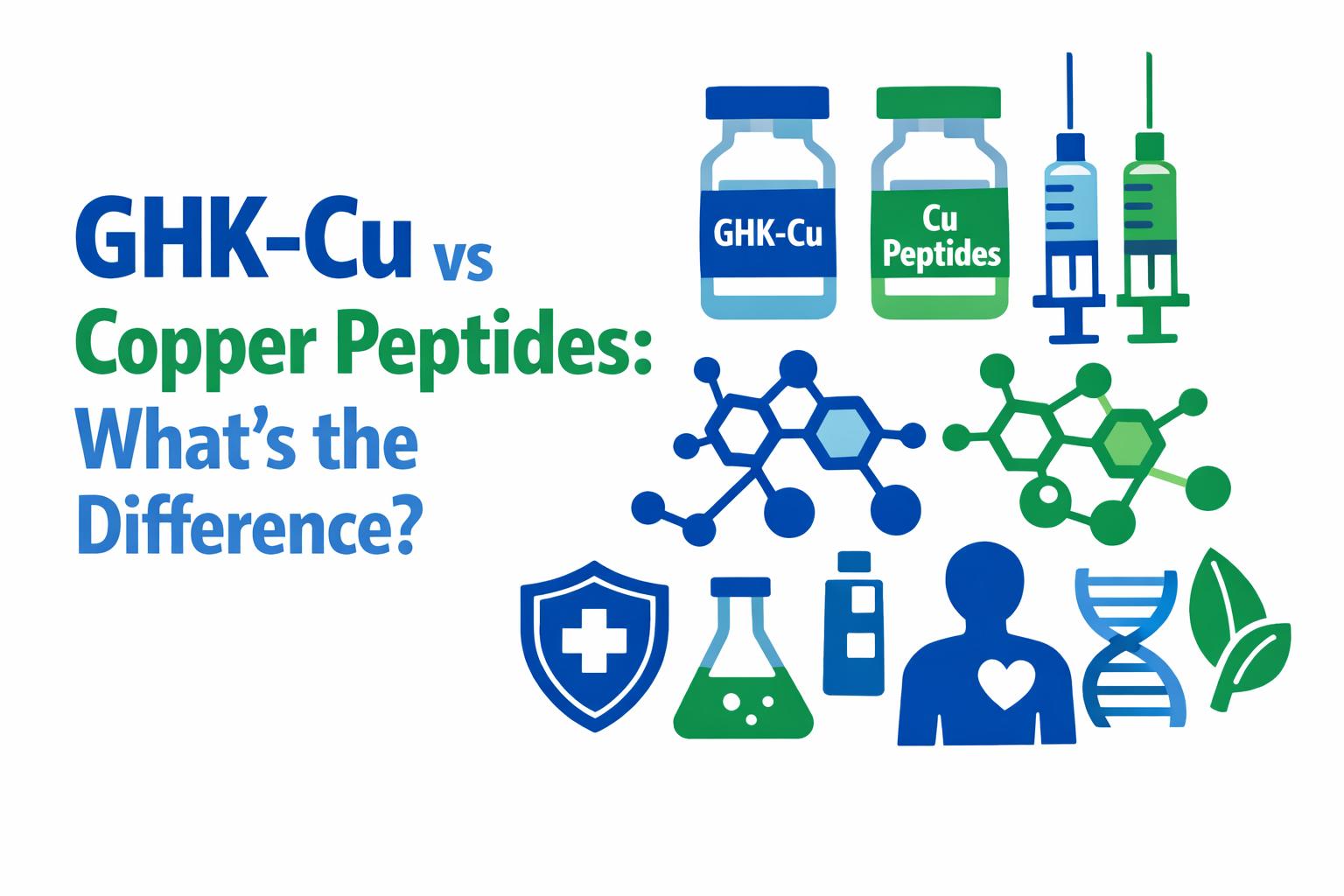
GHK-Cu vs Copper Peptides: What’s the Difference?
If you’ve spent any time researching skincare ingredients, you’ve probably come across both GHK-Cu and the broader category of copper peptides. They sound similar, and in many ways they are, but treating them as interchangeable can lead to confusion about what you’re actually putting on your skin and why.
GHK-Cu is a specific tripeptide complex, formally known as Glycyl-L-Histidyl-L-Lysine bound to copper. It’s one of the most studied copper peptide compounds in dermatology, with a well-documented profile of effects on collagen production, skin regeneration, and wound healing. Other copper peptides, like AHK-Cu, share the copper-binding mechanism but differ in structure, behavior, and application.
Understanding the distinction matters whether you’re building a targeted peptide serum routine or choosing between formulations for a specific skin concern. This guide breaks down the differences clearly so you can make an informed decision.
Feature-by-Feature Analysis
Chemical Structure and Composition
GHK-Cu is a tripeptide, meaning it’s made of three amino acids: glycine, histidine, and lysine, chelated with a copper ion. This specific sequence gives it a unique three-dimensional shape that interacts with skin receptors and fibroblast cells in a highly targeted way.
Other copper peptides vary in their amino acid sequences. AHK-Cu, for example, uses alanine, histidine, and lysine, which changes how it binds to tissue and how deeply it penetrates the skin barrier. The copper complex in both cases is what drives biological activity, but the peptide carrier determines where and how that activity occurs.
| Feature | GHK-Cu | AHK-Cu | General Copper Peptides |
|---|---|---|---|
| Peptide Type | Tripeptide | Tripeptide | Varies (di, tri, tetrapeptide) |
| Copper Binding | Strong chelation | Moderate chelation | Variable |
| Primary Use | Anti-aging, repair | Hair growth, scalp | Broad skin support |
| Skin Penetration | Moderate to high | Moderate | Varies by formulation |
| Clinical Studies | Extensive | Limited | Mixed |
The structural difference is not cosmetic. It directly affects how each compound behaves once applied topically, how stable it remains in a formula, and what skin concerns it addresses most effectively.
Biological Mechanisms and Effects
GHK-Cu works by activating fibroblast cells, which are responsible for producing collagen, elastin, and glycosaminoglycans. This stimulation supports skin elasticity and helps reverse visible signs of aging at a cellular level. It also functions as an antioxidant, neutralizing free radicals that accelerate skin degradation.
Beyond anti-aging, GHK-Cu has a well-established role in wound healing. It accelerates tissue repair, reduces inflammation, and supports the restoration of the skin barrier function. These properties make it one of the most versatile skincare ingredients in clinical use.
Other copper peptides share some of these mechanisms but with different intensities. AHK-Cu, for instance, is more specifically linked to hair growth stimulation and scalp health rather than broad skin regeneration. If you’re exploring what peptides actually do for your skin’s radiance and repair, understanding these mechanistic differences is essential before choosing a product.
General copper peptides without a specific designation often contain a mix of copper-binding sequences. Their effects can be beneficial but are less predictable than using a well-characterized compound like GHK-Cu.
Stability and Formulation Compatibility
GHK-Cu is relatively stable in aqueous formulations but can degrade when exposed to high pH environments or oxidizing agents. Formulators typically keep it in slightly acidic to neutral pH ranges to preserve its copper complex integrity.
One common challenge is combining copper peptides with vitamin C or retinol. Vitamin C, particularly in its ascorbic acid form, can destabilize the copper ion, reducing the effectiveness of the peptide complex. Retinol is generally more compatible but should still be used in separate application steps to avoid interference.
Hyaluronic acid is one of the most compatible partners for GHK-Cu in a peptide serum. It enhances skin hydration without disrupting the copper complex, making it a popular combination in high-performance anti-aging formulations.
Pricing Differences

Cost Factors and Availability
GHK-Cu is widely available as a raw ingredient and in finished skincare products. Its production involves peptide synthesis, which carries a cost, but the scale of manufacturing has made it relatively accessible compared to newer or more complex peptide compounds.
Raw GHK-Cu powder typically costs more per gram than generic copper peptide blends, but the concentration required for efficacy is low, usually between 0.5% and 2% in a finished formula. This means the cost per application is manageable even in premium formulations.
AHK-Cu and other specialized copper peptides can be harder to source and may carry a higher price tag due to lower production volumes. Products marketed specifically for hair growth or scalp health using AHK-Cu often sit at a higher price point than general copper peptide serums.
Value Comparison per Use Case
For skin anti-aging and repair, GHK-Cu offers strong value. The depth of clinical studies supporting its use means you’re investing in a well-understood ingredient with a reliable track record. Generic copper peptide blends may cost less but offer less predictability in results.
For hair and scalp applications, AHK-Cu may justify its higher cost if hair growth is the primary goal. GHK-Cu has some supporting evidence for hair follicle stimulation, but AHK-Cu is more specifically studied in that context.
- GHK-Cu serums: moderate to premium pricing, widely available
- AHK-Cu products: higher price point, more specialized
- Generic copper peptide blends: lower cost, variable efficacy
- Combination formulas: mid-range pricing, broader but less targeted effects
Budget-conscious consumers building a comprehensive routine should prioritize GHK-Cu for its versatility. If you’re also considering a broader anti-aging peptide stack for more comprehensive skin support, GHK-Cu is a foundational ingredient worth including.
Unique Selling Points
GHK-Cu’s strongest selling point is its research depth. No other copper peptide has been studied as extensively across wound healing, collagen production, skin elasticity, and antioxidant activity. That breadth of evidence gives formulators and consumers a high level of confidence in its effects.
Its blue copper peptide appearance, a characteristic blue-green tint in concentrated solutions, has also become a recognizable marker of quality in the skincare market. Consumers associate this color with potency, and brands have leaned into it as a visual indicator of active ingredient presence.
AHK-Cu’s unique selling point is specificity. For consumers focused primarily on hair growth and scalp health, it offers a more targeted mechanism than GHK-Cu. It’s not trying to do everything; it’s optimized for one application area.
General copper peptides sell on accessibility and price. They’re often found in mass-market skincare lines where the goal is to offer copper peptide benefits at a lower cost. The trade-off is less precision in outcomes.
GHK-Cu also stands out for its inflammation reduction properties. This makes it suitable for sensitive skin types who need active anti-aging support without the irritation risk associated with retinol or strong exfoliants.
Bioavailability is another differentiator. GHK-Cu’s small molecular size allows for reasonable skin penetration through topical application, though delivery systems like liposomes or peptide-enhancing carriers can further improve absorption. Generic copper peptides vary widely in their bioavailability depending on molecular weight and formulation quality.
Specific Use Case Scenarios
Skin Anti-Aging and Repair
For someone focused on reducing fine lines, improving skin elasticity, and supporting collagen production, GHK-Cu is the clear choice. Its fibroblast-activating properties directly address the cellular mechanisms behind skin aging, making it more targeted than a generic copper peptide blend.
A typical anti-aging routine using GHK-Cu might include a peptide serum applied after cleansing and toning, followed by a moisturizer containing hyaluronic acid. This layering approach maximizes absorption and supports the skin barrier function without overloading the skin.

Clinical studies on GHK-Cu consistently show improvements in skin texture, firmness, and hydration with regular use. These results are more consistently documented than those for other copper peptides, giving it a stronger evidence base for anti-aging claims.
Hair and Scalp Health
Hair growth is one area where AHK-Cu has a distinct advantage over GHK-Cu. AHK-Cu has been shown to stimulate hair follicle activity more directly, making it the preferred copper peptide for scalp serums and hair loss treatments.
GHK-Cu does have some supporting evidence for hair follicle stimulation, particularly in the context of improving scalp circulation and reducing inflammation. For someone dealing with hair thinning alongside skin concerns, a product combining both peptides may offer the best of both worlds.
Scalp health products using copper peptides are typically formulated as lightweight serums or tonics designed for direct application to the scalp. Concentration and delivery method matter significantly in this application, as the scalp’s skin structure differs from facial skin.
Wound Healing and Sensitive Skin
GHK-Cu’s wound healing properties are among its most well-documented benefits. It accelerates tissue repair, supports new blood vessel formation, and reduces the inflammatory response that can slow healing. This makes it valuable not just in cosmetic dermatology but in clinical wound care contexts.
For sensitive skin, GHK-Cu offers a gentler alternative to retinol for achieving skin regeneration and anti-aging effects. Its inflammation reduction properties mean it’s less likely to cause redness or irritation, which is a significant advantage for reactive skin types.
If you’re researching peptides with broader healing applications, the healing peptide stack guide covers how GHK-Cu fits alongside other repair-focused compounds. Post-procedure skin, whether after chemical peels or laser treatments, can benefit significantly from GHK-Cu’s regenerative properties.
Generic copper peptides can also support wound healing but with less consistency. Without knowing the specific peptide sequences in a blend, it’s harder to predict the depth of healing response you’ll get.
Conclusion
GHK-Cu and copper peptides are not the same thing, even though GHK-Cu is technically a copper peptide. The distinction lies in specificity, research depth, and targeted application. GHK-Cu is the most studied, most versatile, and most reliably effective copper peptide available for topical skincare use.
Other copper peptides like AHK-Cu have their place, particularly in hair and scalp applications where their specific mechanisms offer advantages. Generic copper peptide blends can provide broad benefits at lower cost but lack the precision of a well-characterized compound.
Choosing between them comes down to your specific goals. For anti-aging, skin repair, wound healing, and sensitive skin support, GHK-Cu is the stronger choice. For targeted hair growth support, AHK-Cu deserves serious consideration. For budget-friendly general skin support, a quality copper peptide blend can still deliver meaningful results.
The skincare industry continues to explore new peptide combinations and delivery systems that enhance the effectiveness of these compounds. Staying informed about the specific ingredients in your products, rather than relying on broad category labels, will always serve your skin better.
FAQ
What is the main structural difference between GHK-Cu and other copper peptides like AHK-Cu?
GHK-Cu is composed of glycine, histidine, and lysine chelated with copper, forming a specific tripeptide complex. AHK-Cu replaces glycine with alanine, which changes its receptor binding behavior and shifts its primary application toward hair follicle stimulation rather than broad skin regeneration. The copper ion is present in both, but the peptide carrier sequence determines where and how each compound acts within skin tissue.
Which is better for skin anti-aging: GHK-Cu or AHK-Cu?
GHK-Cu is significantly better supported for skin anti-aging applications. Its effects on fibroblast activation, collagen production, skin elasticity, and antioxidant activity are backed by extensive clinical studies. AHK-Cu is more specialized for hair and scalp health and has a much smaller body of research supporting its use in facial anti-aging. For a comprehensive anti-aging routine, GHK-Cu is the more evidence-based choice, and pairing it with complementary ingredients like a deeper look at GHK-Cu’s full benefits and applications can help you use it more effectively.
Are copper peptides like GHK-Cu compatible with other skincare actives?
GHK-Cu is compatible with many common skincare ingredients, including hyaluronic acid, niacinamide, and most moisturizing agents. The main compatibility concern is with high-concentration vitamin C in ascorbic acid form, which can destabilize the copper complex and reduce efficacy. Retinol can be used alongside GHK-Cu but is best applied in separate steps to avoid potential interaction. Layering GHK-Cu with peptide-rich formulas generally enhances rather than diminishes its effects, making it a flexible addition to most skincare routines.