Reconstitution Solution vs Bacteriostatic Water Compared
Choosing the right solution to reconstitute a lyophilized powder might seem like a minor detail, but it can significantly affect the stability, safety, and effectiveness of what you’re injecting. Whether you’re working with peptides, hormones, or other pharmaceutical-grade compounds, the liquid you use to dissolve them matters more than most people realize.
Bacteriostatic water and reconstitution solution are the two most commonly used options, and while they might look identical in a vial, their formulations serve different purposes. Understanding those differences helps you make smarter decisions, avoid contamination, and protect the integrity of your compounds. This guide breaks down everything you need to know in plain terms.
Both options are sterile, both are used in injection solution preparation, and both can dissolve lyophilized powder effectively. But the similarities largely stop there. From preservative content to pH level to multi-dose vial compatibility, the details matter and this comparison covers all of them.
Feature-by-Feature Comparison
Composition and Preservatives
The most fundamental difference between these two solutions comes down to what’s actually in them. Bacteriostatic water is sterile water for injection that contains 0.9% benzyl alcohol as a bacteriostatic agent. That preservative is what gives it its name and its key functional advantage.
Reconstitution solution, on the other hand, varies more in its formulation. It may contain sodium chloride, benzyl alcohol, or other preservatives depending on the manufacturer and intended use. Some versions are essentially isotonic saline solutions designed to match the body’s natural fluid composition.
Benzyl alcohol is the critical ingredient that prevents microbial growth in bacteriostatic water, allowing the vial to be used multiple times without becoming a contamination risk. Without it, a solution opened and re-entered multiple times would quickly become unsafe.
Here is a quick side-by-side breakdown of the core compositional differences:
| Feature | Bacteriostatic Water | Reconstitution Solution |
|---|---|---|
| Primary Ingredient | Sterile Water | Sterile Water or Saline |
| Preservative | 0.9% Benzyl Alcohol | Varies (may include benzyl alcohol or none) |
| Sodium Chloride | Not typically included | Often included (0.9%) |
| Multi-Dose Use | Yes | Depends on formulation |
| Single-Use Vial Option | Available | Common |
| Shelf Life After Opening | Up to 28 days | Often single-use only |
The presence or absence of a preservative is the defining factor in how each solution can be used. If you’re working with a compound that requires multiple doses over time, bacteriostatic water is typically the more practical choice.
Sterility, pH, and Formulation Standards
Both solutions must meet pharmaceutical-grade sterility standards to be considered safe for injection. Sterility is non-negotiable, and any solution used for subcutaneous injection or intramuscular injection must be produced under strict manufacturing conditions.
The pH level of each solution can differ, and this matters more than people expect. Bacteriostatic water typically has a pH close to neutral, around 5.7, while reconstitution solutions may be formulated to match specific pH requirements of the compound being dissolved.
Peptide stability is directly influenced by the pH of the reconstitution medium. Some peptides degrade faster in solutions that are too acidic or too alkaline, which is why matching the right solution to the right compound is essential.
Osmolarity is another formulation consideration. Reconstitution solutions that include sodium chloride are isotonic, meaning they match the osmolarity of blood and tissue fluids. This can reduce injection site discomfort and is particularly relevant for intramuscular injection applications.
- Bacteriostatic water: pH approximately 5.7, hypotonic
- Saline-based reconstitution solution: pH approximately 5.0 to 7.0, isotonic
- Both must meet pharmaceutical-grade sterility requirements
- Contamination prevention depends on proper handling, not just formulation
Storage temperature also plays a role in maintaining sterility and formulation integrity. Both solutions should be stored according to manufacturer guidelines, typically at room temperature before opening and refrigerated after.
Usage Restrictions and Multi-Dose Capability
This is where the practical differences become most apparent. Bacteriostatic water is specifically designed for multi-dose vial use. The benzyl alcohol preservative inhibits microbial growth, which means the vial can be accessed multiple times over a period of up to 28 days without significant contamination risk.
Reconstitution solution without a preservative is generally intended for single-use vial applications. Once opened and used, the remainder should be discarded to prevent contamination. This makes it less economical for compounds that require frequent, smaller doses.
HGH reconstitution is one of the most common use cases where bacteriostatic water is specifically recommended. Growth hormone is typically dosed multiple times per week, making multi-dose capability a practical necessity rather than a convenience.

For researchers and individuals working with peptides that require daily or multiple-weekly dosing, the multi-dose capability of bacteriostatic water is a significant advantage. It reduces waste and simplifies the dosing process considerably.
Pricing Differences
Cost is a real consideration, especially for those using these solutions regularly. Bacteriostatic water is widely available and generally affordable, with small vials typically ranging from a few dollars to around ten dollars depending on the source and volume.
Reconstitution solution pricing varies more widely because the formulation itself varies. Saline-based versions are often similarly priced to bacteriostatic water, while specialty reconstitution solutions designed for specific compounds may cost more.
If you’re sourcing peptides and need to understand what you’re actually getting in terms of quality and value, learning how to interpret a peptide certificate of analysis will help you evaluate both the compound and the recommended reconstitution medium.
Buying in bulk typically reduces the per-vial cost for both options. For regular users, purchasing multiple vials at once from a reputable pharmaceutical-grade supplier is the most cost-effective approach.
- Bacteriostatic water: generally low cost, widely available
- Reconstitution solution: variable pricing based on formulation
- Bulk purchasing reduces per-unit cost for both
- Pharmaceutical-grade sourcing is worth the premium for injection use
The real cost consideration is not just the price of the solution itself but the cost of wasting a compound due to degradation or contamination from using the wrong solution. Spending a few extra dollars on the right product protects a much more significant investment.
Unique Selling Points and Use Case Scenarios
Laboratory and Peptide Reconstitution
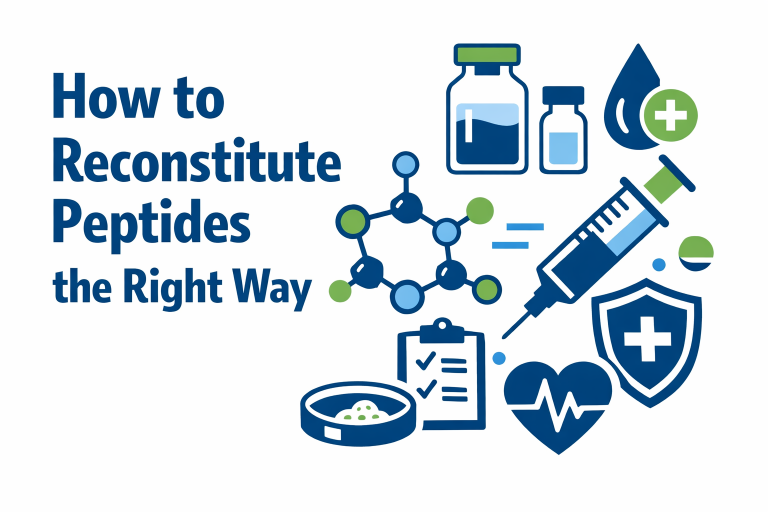
In research and laboratory settings, peptide reconstitution is one of the most frequent applications for both solutions. Lyophilized powder must be dissolved carefully to preserve peptide stability, and the choice of solvent directly affects how well the peptide holds up over time.
Bacteriostatic water is the go-to choice for most peptide reconstitution because it allows the reconstituted solution to be stored and used over multiple sessions. This is particularly important for research applications where consistent dosing over time is required.
For those working with specific peptides like growth hormone secretagogues, the reconstitution process is critical. If you’re researching compounds like CJC-1295 and its different formulations, understanding how each variant behaves after reconstitution is part of using them correctly.
The dilution ratio used during reconstitution also affects the final concentration of the solution. Getting this right requires knowing the volume of bacteriostatic water or reconstitution solution to add relative to the amount of lyophilized powder in the vial.
- Use bacteriostatic water for multi-dose peptide vials
- Match the dilution ratio to your target concentration
- Store reconstituted peptides refrigerated to extend shelf life
- Avoid vigorous shaking, which can degrade peptide structure
Reconstitution solution may be preferred in specific laboratory contexts where the isotonic nature of the solution is important for downstream assays or biological testing. The sodium chloride content can affect cell viability in certain research applications.
Injection and Medical Applications
For actual injection use, both solutions serve important roles depending on the compound and the injection route. Subcutaneous injection is the most common route for peptide administration, and both bacteriostatic water and reconstitution solution are compatible with this method.
Intramuscular injection may benefit more from isotonic reconstitution solutions because the sodium chloride content reduces osmotic stress at the injection site. This can translate to less discomfort and faster absorption in some cases.
HGH reconstitution almost universally calls for bacteriostatic water because of the multi-dose requirement and the sensitivity of growth hormone to pH and preservative interactions. Using the wrong solution can reduce potency or cause degradation.

For peptides used in immune support or neurological research, the reconstitution medium should be chosen carefully. Compounds like Thymosin Alpha 1 have specific stability requirements that make the choice of reconstitution solution more than just a practical matter.
Injection solution preparation should always follow the manufacturer’s or supplier’s guidelines. When in doubt, bacteriostatic water is the safer default for most peptide applications due to its preservative content and widespread compatibility.
Allergy and Availability Considerations
Benzyl alcohol sensitivity is a real concern for some individuals. While reactions are uncommon, they do occur, and anyone with a known sensitivity to benzyl alcohol should avoid bacteriostatic water and opt for a preservative-free reconstitution solution instead.
Neonates and premature infants should never receive benzyl alcohol-containing solutions, as the compound can cause serious adverse effects in this population. This is a well-established medical restriction that applies to any benzyl alcohol-containing injection solution.
Availability is generally not an issue for either product. Both bacteriostatic water and reconstitution solution are widely stocked by pharmaceutical suppliers, compounding pharmacies, and research chemical vendors. However, pharmaceutical-grade sourcing is strongly recommended for any injection application.
- Avoid bacteriostatic water if benzyl alcohol sensitivity is present
- Use preservative-free reconstitution solution as an alternative
- Never use benzyl alcohol-containing solutions in neonates
- Source from pharmaceutical-grade suppliers for injection safety
For those exploring peptides that affect cognitive function or mood, such as Semax, the reconstitution method and solution quality are just as important as the peptide quality itself. A poorly reconstituted peptide delivers inconsistent results regardless of its purity.
Conclusion
The choice between bacteriostatic water and reconstitution solution is not arbitrary. It depends on the compound you’re working with, how frequently you’ll be dosing, your sensitivity to preservatives, and the specific requirements of your application.
Bacteriostatic water wins on multi-dose capability and is the standard choice for most peptide reconstitution and HGH reconstitution applications. Its benzyl alcohol preservative content keeps microbial growth in check and extends the usable shelf life of reconstituted compounds significantly.
Reconstitution solution offers advantages in isotonicity and preservative-free options, making it the better choice for single-use applications, specific laboratory contexts, and individuals with benzyl alcohol sensitivity.
Both solutions must meet pharmaceutical-grade sterility standards, and both require proper storage temperature management to maintain their integrity. The right choice depends on your specific situation, not a one-size-fits-all recommendation.
If you’re working with a blend product and want to understand how reconstitution affects its performance, reviewing a detailed breakdown like the Klow Peptide Blend analysis can give you useful context on how formulation decisions affect real-world outcomes.
FAQ
Can reconstitution solution and bacteriostatic water be used interchangeably?
In many cases, they can be used interchangeably for basic peptide reconstitution, but this depends on the specific compound and its requirements. The key difference is the preservative content. Bacteriostatic water contains benzyl alcohol, which allows multi-dose use, while many reconstitution solutions do not include a preservative and are intended for single-use only.
If you need to access a vial multiple times over days or weeks, bacteriostatic water is the appropriate choice. Using a preservative-free reconstitution solution in a multi-dose scenario creates a contamination risk that increases with each vial entry.
What are the risks of using the wrong solution for injections?
Using the wrong solution can lead to several problems, including peptide degradation, contamination, and adverse injection site reactions. A solution with an incompatible pH level can destabilize certain peptides, reducing their effectiveness or rendering them inactive entirely.
Contamination is the most serious risk. A preservative-free solution accessed multiple times without proper aseptic technique can introduce microbial growth into the vial, creating a potentially dangerous injection solution. Osmolarity mismatches can also cause discomfort or tissue irritation at the injection site.
Is bacteriostatic water suitable for all peptide reconstitution needs?
Bacteriostatic water is suitable for the vast majority of peptide reconstitution applications and is the most commonly recommended option for this purpose. Its preservative content, sterility, and compatibility with most lyophilized powder formulations make it a reliable default choice.
However, it is not appropriate for individuals with benzyl alcohol sensitivity, and it should not be used in neonates under any circumstances. Some specialized research applications may also require a specific reconstitution solution formulation to meet assay or biological testing requirements. Always check the specific recommendations for the compound you are working with before making a final decision.